
A Residential Zone, commonly known as an R-Zone, is an area identified by a local planning authority primarily for residential development. Land located within this zone may be permitted for houses, bungalows, apartments, residential buildings, housing societies and other related developments, subject to local development rules and approvals.
Understanding the zoning classification of land is important before purchasing, developing or investing in any property. A plot may appear suitable for construction, but its actual development potential depends on its designated land-use zone, access road, title status, permissible Floor Space Index, building restrictions and approvals from the relevant authority.
This guide explains the meaning of a Residential Zone, its common types, permitted uses and the important checks buyers should complete before purchasing R-Zone land.
What Is a Residential Zone?
A Residential Zone is a geographical area marked in a Development Plan, Regional Plan or local land-use plan for residential purposes.
The primary purpose of residential zoning is to organise urban and regional development by separating housing areas from heavy industries, hazardous activities and other incompatible land uses.
Depending on the location and applicable planning regulations, land in a Residential Zone may be developed for:
- Individual houses
- Bungalows and villas
- Residential buildings
- Apartment projects
- Housing societies
- Row houses
- Staff housing
- Senior living projects
- Hostels or residential accommodation
- Supporting neighbourhood facilities
However, simply having land in an R-Zone does not automatically permit immediate construction. The owner may still need land conversion, layout approval, building permission, environmental clearance or other local approvals.
What Does R-Zone Mean?
The term R-Zone is a commonly used abbreviation for Residential Zone.
It indicates that the proposed or permitted land use is primarily residential. In some Development Plans, residential areas may be divided into different categories based on population density, infrastructure capacity, building height and the nature of development allowed.
For example, an R-Zone may be suitable for a plotted bungalow project, while another residential category may permit multi-storey apartment buildings.
The exact meaning, development potential and restrictions of an R-Zone vary from one planning authority to another. Buyers should therefore verify the official zoning remarks instead of relying only on information provided verbally by a broker, owner or developer.
Why Are Property Zones Important?
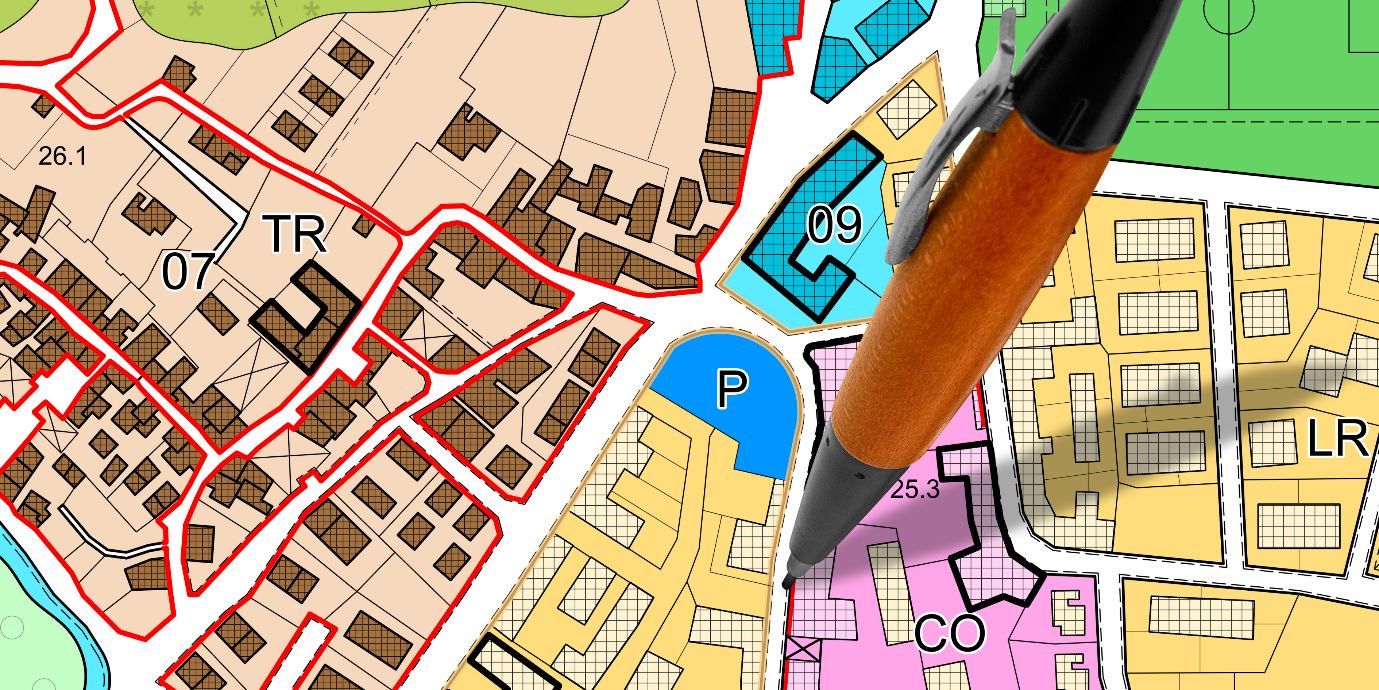
Property zones help planning authorities control how different areas are developed. They ensure that housing, businesses, industries, public facilities and open spaces are located in a planned manner.
Common property zones may include:
- Residential Zone
- Commercial Zone
- Industrial Zone
- Agricultural Zone
- Public and Semi-Public Zone
- Recreational or Open Space Zone
- Green Zone
- Transport and Communication Zone
- No-Development Zone
- Mixed-Use Zone
Every zone has its own permitted uses, restrictions and development conditions. Zoning can influence the property's market value, construction potential, financing eligibility and long-term investment prospects.
Before purchasing any land, it is therefore essential to confirm the property zone shown in the sanctioned Development Plan or Regional Plan.
What Can Be Developed on Land for Residential Use?
Land officially approved as land for residential use can generally be considered for different types of housing development.
Common residential projects may include:
1. Individual Houses
A residential plot may be used for constructing an independent house, villa or bungalow, subject to plot size, setbacks, road width and building-permission rules.
2. Row Houses
Larger R-Zone parcels may be developed into row-house projects with internal roads, drainage, water supply, electricity and common amenities.
3. Apartment Buildings
Residential land situated near urban centres and wider access roads may be suitable for apartment development, depending on the permissible building height, FSI and local regulations.
4. Residential Layouts
Large land parcels can be divided into individual residential plots through an approved layout. The developer may have to provide internal roads, open spaces, utility areas and other infrastructure.
5. Housing Societies
Residential zoning may permit cooperative housing societies, gated communities and organised residential developments.
6. Supporting Facilities
Certain neighbourhood-level facilities may be permitted within residential areas. These may include small convenience shops, clinics, schools, community spaces or professional offices, depending on local regulations.
Permission for these activities must be verified with the relevant planning authority.
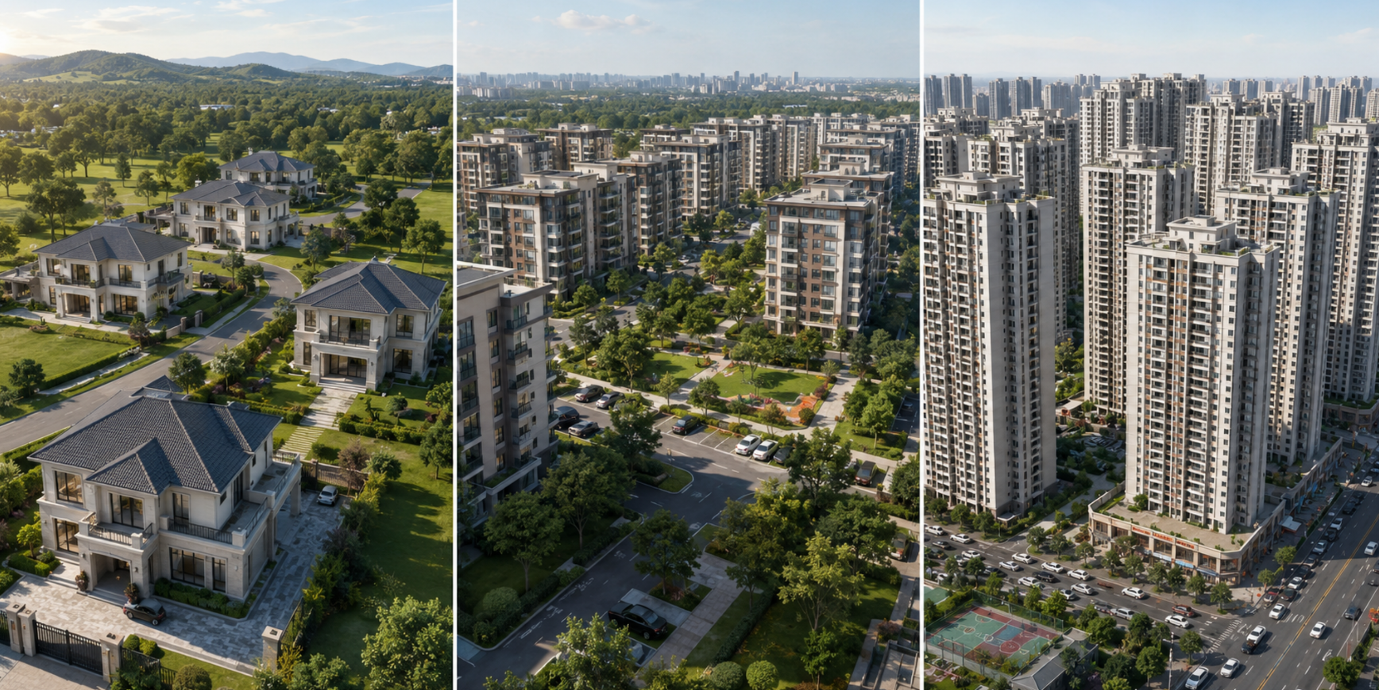
Types of Residential Zones
Residential areas may be classified according to the density, building type and scale of development permitted.
1. General Residential Zone
A general residential zone is mainly intended for regular housing development. It may permit individual houses, row houses, apartment buildings and supporting residential facilities.
The development potential generally depends on factors such as:
- Plot size
- Access-road width
- Permissible FSI
- Building height
- Required setbacks
- Availability of infrastructure
- Fire and safety requirements
A general residential zone is commonly found in developing urban areas, municipal limits and planned extensions of towns and cities.
2. Low Density Residential Zone
A low density residential zone is designed for fewer residential units over a larger land area.
This type of zone may be suitable for:
- Bungalows
- Villas
- Farmhouse-style residences
- Weekend homes
- Premium plotted developments
- Low-rise residential communities
Low-density areas usually have more open space and fewer buildings compared with densely developed urban locations. Plot sizes may be larger, while permissible construction density may be lower.
These zones are often preferred for peaceful residential communities, second homes and premium lifestyle developments.
3. High Density Residential Zone
A high density residential zone allows a larger number of residential units within a defined area.
It may include:
- Multi-storey apartment buildings
- Large housing societies
- Redevelopment projects
- Affordable housing
- Integrated residential communities
- Transit-oriented residential projects
High-density development is generally concentrated in areas with wider roads, public transport, water supply, drainage and other urban infrastructure.
The ability to construct a high-rise building does not depend on zoning alone. Road width, aviation restrictions, fire permissions, FSI, environmental conditions and local building regulations must also be considered.
4. Apartment Zoning
Apartment zoning refers to land-use regulations that permit apartment or multi-family residential development.
Not every residential plot is automatically suitable for a large apartment project. The planning authority may consider:
- Minimum plot area
- Frontage
- Approach-road width
- Permissible building height
- Parking requirements
- Fire-tender movement
- Open-space requirements
- Sewage and water infrastructure
- Maximum development density
Before purchasing land for an apartment project, developers should conduct a detailed zoning and development-potential study.
5. Commercial Residential Zoning
Commercial residential zoning generally refers to mixed-use development where residential and permissible commercial activities may operate within the same building or area.
A mixed-use project may include:
- Shops on the ground floor
- Offices or clinics on lower floors
- Residential apartments on upper floors
- Convenience retail
- Restaurants or service businesses
- Professional workspaces
Such development is usually found along major roads, market areas and urban centres. The commercial component may be restricted according to the plot location, road width, building design and local planning regulations.
Commercial activity should not be started merely because a property is situated in a Residential Zone. The permitted use must be confirmed through official zoning and building approvals.
Agricultural Residential Zoning: Can Agricultural Land Be Used for Housing?
The phrase agricultural residential zoning is often used when agricultural land is proposed to be converted or developed for residential purposes.
Agricultural land cannot ordinarily be developed as a residential project only because it is located near a city, highway or existing housing development.
The following issues may need to be checked:
- Whether the land falls within a proposed or sanctioned Residential Zone
- Whether non-agricultural permission is required
- Whether residential use is permitted in the Regional or Development Plan
- Whether the land has legal access
- Whether the land is affected by reservation
- Whether any tenancy, tribal-land or fragmentation restrictions apply
- Whether a residential layout can be approved
- Whether basic infrastructure can be provided
Agricultural land and Residential Zone land are not always the same. A property may be shown as residential in a future planning proposal while its current revenue record still shows agricultural use.
Such cases require proper legal, revenue and planning verification before purchase or development.
Difference Between Residential Zone and Agricultural Zone
Zoning and revenue classification must both be checked because they represent different aspects of the land.
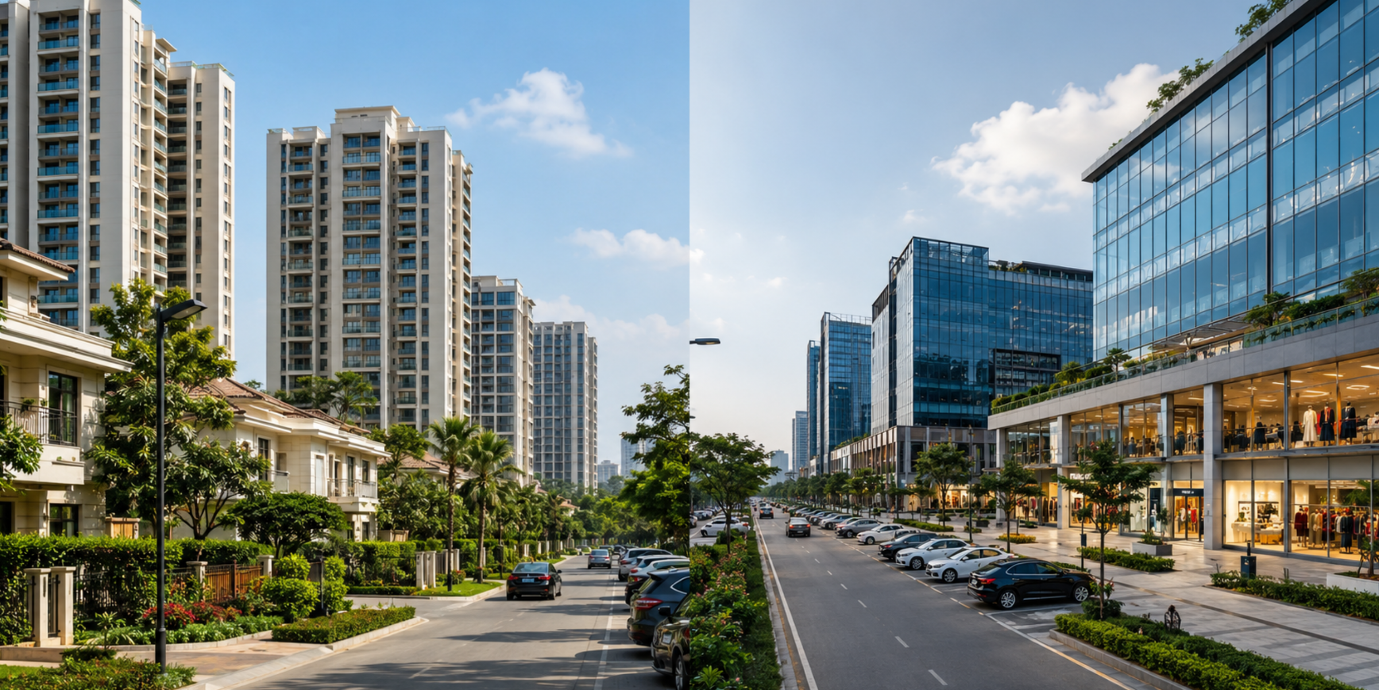
Difference Between Residential and Commercial Zones
A Residential Zone is mainly intended for housing, while a Commercial Zone is intended for business activities such as shops, offices, hotels, showrooms and commercial complexes.
Some residential areas may allow limited commercial activity. However, this does not mean that every residential property can be freely converted into a shop, warehouse, hotel or office.
The following factors may determine whether commercial use is allowed:
- Mixed-use permission
- Road width
- Nature of the proposed business
- Parking availability
- Building approval
- Fire and safety compliance
- Impact on surrounding residents
- Local development-control regulations
Before using a residential property commercially, written confirmation should be obtained from the relevant authority.
Benefits of Buying R-Zone Land
Clear Residential Development Potential
Properly verified R-Zone land offers better clarity for housing, plotted development or apartment projects.
Strong End-User Demand
Residential properties are supported by demand from families, investors, housing societies and developers.
Multiple Development Options
Depending on the location and rules, R-Zone land may be suitable for plots, villas, row houses or apartment buildings.
Better Infrastructure Potential
Residential areas are usually planned with roads, drainage, electricity, water supply, schools and public facilities.
Long-Term Appreciation
R-Zone land near growing cities, highways, employment centres and infrastructure projects may have strong appreciation potential. However, appreciation is not guaranteed and depends on market and regulatory conditions.
Important Checks Before Buying Residential Zone Land
1. Verify the Official Zoning
Obtain the zoning certificate, zoning remark or Development Plan extract from the relevant planning authority.
2. Check the Property Title
Review ownership documents, previous transactions, mutation entries, encumbrances and legal rights over the property.
3. Review the Land Record
Confirm the survey number, area, ownership and land classification shown in the official land record.
4. Confirm Legal Access
The property should have clear and legally recorded access from a public or approved road.
5. Check Reservations and Restrictions
Confirm whether the land is affected by:
- Road widening
- Public reservations
- Green-zone restrictions
- Flood lines
- Forest boundaries
- Coastal regulations
- High-tension lines
- Pipeline corridors
- Defence or aviation restrictions
- No-development zones
6. Confirm NA or Conversion Requirements
Check whether non-agricultural permission, land-use conversion or other revenue permission is required.
7. Study Development Potential
A professional feasibility study should assess:
- Permissible FSI
- Ground coverage
- Building height
- Setbacks
- Open spaces
- Amenity requirements
- Parking
- Road width
- Infrastructure
- Saleable development area
8. Verify Layout and Building Approvals
For plotted developments, confirm that the layout has been approved. For buildings, check the sanctioned plan, commencement permission and other applicable approvals.
9. Check Infrastructure Availability
Review the availability of water, electricity, drainage, sewage disposal and road connectivity.
10. Consult Qualified Professionals
Before completing the transaction, consult a property lawyer, licensed surveyor, architect and planning consultant.
Does R-Zone Mean the Land Is NA?
No. Residential zoning and Non-Agricultural status are related but separate matters.
R-Zone indicates the planned land use of the property. NA status generally relates to permission for using agricultural land for a non-agricultural purpose.
A property may fall within a Residential Zone but still require NA permission or other approvals before construction. Similarly, an old NA order should be checked to confirm the exact permitted use and whether it remains valid for the proposed project.
Can You Build Immediately on R-Zone Land?
Not always.
Before starting construction, the owner may need:
- Land-use confirmation
- NA or conversion permission
- Approved layout
- Building-plan sanction
- Commencement permission
- Fire approval
- Environmental approval
- Utility permissions
- Local authority NOCs
The required approvals depend on the project size, property location and applicable regulations.
Is All R-Zone Land Suitable for Investment?
No. Two properties with the same Residential Zone classification may have completely different development potential.
One property may have a wide approach road and clear title, while another may be landlocked, reserved, under litigation or affected by environmental restrictions.
A good residential land investment should have:
- Clear and marketable title
- Official residential zoning
- Proper legal access
- Suitable plot dimensions
- Infrastructure availability
- Practical development potential
- Clean ownership history
- No major reservations or restrictions
- Strong surrounding development
- Realistic market demand
Zoning should be treated as one part of the complete property due-diligence process.
Frequently Asked Questions
What is a Residential Zone?
A Residential Zone is an area designated primarily for housing and related residential development.
What is the full form of R-Zone?
R-Zone commonly means Residential Zone.
Can apartments be built on R-Zone land?
Apartments may be permitted, but the project must comply with apartment zoning requirements, road width, FSI, parking, fire safety and building regulations.
Can commercial activity be carried out in a Residential Zone?
Limited commercial or mixed-use activity may be permitted in certain areas. Written confirmation should be obtained from the planning authority.
Can agricultural land be converted into Residential Zone land?
Conversion may be possible where the Development Plan or Regional Plan permits residential use. Revenue, planning and local authority approvals may still be required.
Is a Residential Zone property automatically ready for construction?
No. Zoning alone does not replace NA permission, layout approval or building permission.
What is a general residential zone?
A general residential zone is an area intended for normal residential development such as houses, row houses and apartment buildings.
What is a low density residential zone?
A low density residential zone permits fewer housing units and is generally suitable for bungalows, villas and larger residential plots.
What is a high density residential zone?
A high density residential zone permits more residential units and may support apartment buildings and larger housing projects, subject to infrastructure and development rules.
Conclusion
A Residential Zone or R-Zone is land identified primarily for residential development. It may offer opportunities for houses, plotted layouts, villas, row houses, apartments and housing societies.
However, zoning alone does not confirm that a property is legally and technically ready for development. Buyers and developers must also verify the title, land record, legal access, NA status, Development Plan remarks, reservations, FSI, road width and required construction approvals.
A complete legal and technical due-diligence process helps buyers understand the actual development potential of the land and reduces the risk of future disputes or approval problems.